

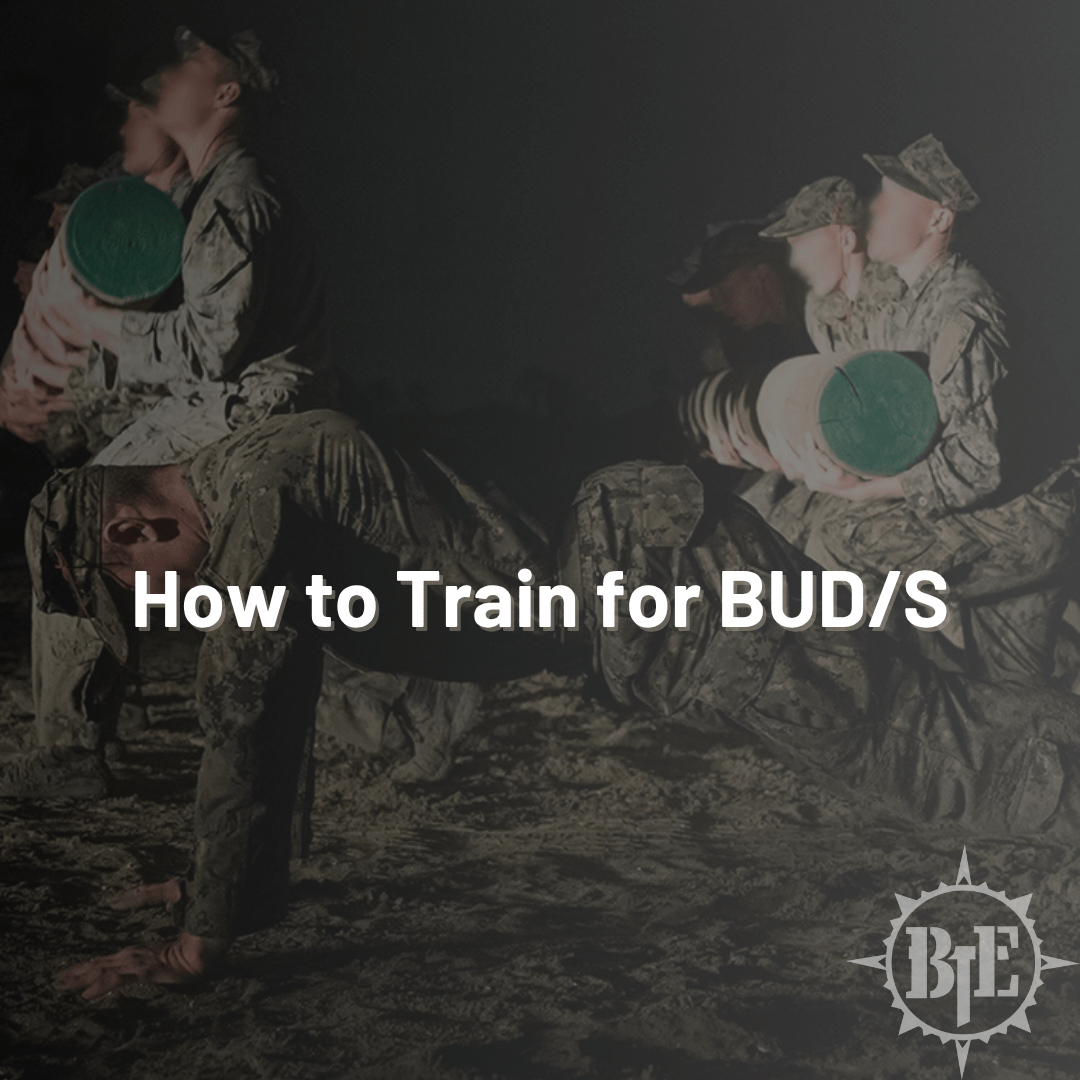
Most candidates should allow at least 12 months to prepare for BUD/S, and candidates with significant weaknesses in running, swimming, water confidence, or durability may need 18–24 months.
An effective BUD/S training program must develop running speed and durability, swimming and finning efficiency, water confidence, calisthenic work capacity, sufficient relative strength, movement quality, and the mental and social skills required to perform under prolonged stress.
BUD/S is one of the most difficult and well-known SOF selection courses in the world. Physically, it requires a broad mixture of athletic capacities, including long runs and open-ocean swims, calisthenic-heavy beatdowns, sprints through a massive obstacle course, strength-intensive buddy carries, running with your boat crew while carrying a rubber IBS boat on your head, and carrying a heavy log while sprinting, lunging, squatting, and pressing it up and down the soft sand of Coronado. There is also extremely difficult water competence testing ranging from drownproofing to 50-meter underwater swims, combat diver testing, treading, and water rescues. Throughout this, you’ll have very little sleep and will spend a good deal of your time in various stages of hypothermia while enduring surf torture and repeatedly covering yourself completely in sand.
These physical trials are set against a backdrop of intense mental and emotional stress, ranging from rigorous testing and training in diving, shooting, and demolitions to withstanding the relentless torment of the instructor cadre who constantly search for signs of weakness. As physically difficult as the course is, fitness alone is of little value without the mental/emotional skills and characteristics necessary to persevere in this environment.
What Does This BUD/S Training Guide Cover?
In this guide, we’ll cover:
- Publicly available PST standards
- Competitive physical benchmarks
- Running, calisthenics, water confidence, and swimming preparation
- Mental, emotional, and social demands
- A 12+ month training timeline
- How to taper before selection
This guide is based on publicly available standards and our experience preparing candidates for SOF selection courses. It does not disclose protected selection details or claim to provide insider information about current selection events.
What Are the Stages of BUD/S?
BUD/S features three 7-week phases that form the most grueling parts of selection. These are preceded by two preparatory phases known as Prep and Basic Orientation that take up another seven weeks in total. These all take place in Coronado, California.
| Stage | Primary focus | Major preparation demands |
|---|---|---|
| BUD/S Prep | Physical preparation and screening | PST performance, running, swimming, and calisthenics |
| Basic Orientation | Introduction to BUD/S routines and timed events | Durability, recovery, swimming, running, and obstacle-course skills |
| First Phase | Physical conditioning and Hell Week | Work capacity, extreme mental/physical endurance, load carriage, teamwork, and emotional control |
| Second Phase | Combat diving | Water confidence, procedural learning, and stress regulation |
| Third Phase | Land warfare | Learning under pressure, judgment, and safe weapons handling |
BUD/S Prep (4 weeks)
The first part of the BUD/S pipeline is Prep. This stage is all about getting candidates ready for the rigors of training and helping to reacclimate candidates to physical training after the relative deconditioning inherent to boot camp.
There are two “evolutions” (physical training events) per day in prep. These will be some mixture of a run, a strength/calisthenics session, the obstacle course, or a swim. You’ll have some mild “beatdowns” of calisthenics focusing on burpees, pushups, flutter kicks, 8-count bodybuilders, etc. These won’t be overly intense; just an introductory level of exposure.
BUD/S Prep Entrance PST
At the end of your first week in prep, you’ll do an entrance PST. If you fail this, you’ll be removed from training.
| BUD/S Prep Entrance PST Component | Minimum Standard | Competitive Standard |
|---|---|---|
| 500-yard swim, no fins | 12:30 | 9:30 |
| Push-ups (two-minute limit) | 50 | 75 |
| Pull-ups, continuous | 10 | 15 |
| Sit-ups (two-minute limit) | 50 | 75 |
| 1.5-mile timed run (with shoes and pants) | 10:30 | 9:30 |
Note that these competitive-standard stats are based on the Navy’s official recommendations as of July 2026. While 9:30 for the run and swim are good times, we like to see candidates closer to 9:00 on each of these events before shipping.
BUD/S Prep Exit PST
In your final week of prep, you’ll do an exit PST. This one is “modified” with a longer run and swim, and the swim is done with fins. If you fail this, you’ll be rolled back to the next prep class and start over. Failing it twice generally results in dismissal from training.
In some cases when classes are unusually large, candidates may be graded on a curve, and only students with relatively strong PST scores will move on to BO, and the others (despite passing the minimum Exit PST standards) will be rolled back to the next prep class.
| BUD/S Prep Exit PST Component | Minimum Standard | Building the Elite Recommended Target |
|---|---|---|
| 1000-meter swim, with fins | 20:00 | 17:30 |
| Push-ups (two-minute limit) | 50 | 80 |
| Pull-ups, continuous | 10 | 16 |
| Sit-ups (two-minute limit) | 50 | 80 |
| 4-mile timed run (with shoes and pants) | 32:00 | 28:00 |
BUD/S Basic Orientation (3 weeks)
In Basic Orientation (BO), you’ll do a series of timed evolutions to earn the right to move on to First Phase.
The daily physical routine becomes somewhat more intense here to help you prepare for First Phase, and as daily run mileage (much of it from transit running to/from meals and to different evolutions) accumulates, some students will start to have issues with shin splints and other overuse injuries. This is one of the first inflection points where you start to see who has prepared well and knows how to take care of themselves.
As of July 2026, Building the Elite’s current information indicates that log and boat evolutions are not part of Basic Orientation. Training content can change between classes, so candidates should prepare for the underlying physical demands rather than depend on an exact event sequence.
| Basic Orientation Timed and Pass/Fail Evolutions | Minimum Standard | Building the Elite Recommended Target |
|---|---|---|
| 2-mile ocean swim with fins | 85:00 | 75:00 |
| Obstacle course | 12:30 | 8:00 |
| 4-mile timed run | 32:00 | 29:00 |
| Knot Tying and 35m Underwater Swim | Pass/Fail | Pass/Fail |
BUD/S Push-up, Pull-up, Run, O-Course, and Swim Standards by Phase
Your performance standards for calisthenics and timed events will increase with each phase of training. Calisthenics like push-ups and pull-ups will be a regular part of every day, and you’ll be tested weekly on your run, swim, and obstacle course times.
| Event | First Phase | Second Phase | Third Phase |
|---|---|---|---|
| 4-Mile Timed Run | 32:00 | 29:20 | 28:00 |
| 2-Mile Ocean Swim | 85:00 | 80:00 | 75:00 |
| Push-ups (reps per set, every time you’re dropped) | 20 | 40 | 50 |
| Pull-ups (minimum reps per set) | 10 | 10 | 10* |
| Obstacle Course | 12:30 | 11:30 | 10:30 |
*Note that your standard sets of pull-ups in Third Phase will still be ten reps minimum, but before each meal, you’ll have to do a set of at least 12 reps while wearing kit to eat inside the galley. If you don’t hit 12 reps, you’ll have to run up a hill and do some sprints, then eat outside.
Competitive O-Course Times
For most people, the obstacle course has relatively easy performance standards compared to the runs and swims in BUD/S. So, your performance on the O-Course is less about clearing the cutoff time and more about how you rank relative to the rest of the class and historical stats.
| O-Course Time | Performance Level |
|---|---|
| 11:00–12:30 | Instructors will make many mayonnaise-related jokes about you |
| 10:00–10:59 | Meh |
| 9:00–9:59 | Alright, you know what you’re doing |
| 8:00–8:59 | Somewhat impressive |
| 7:00–7:59 | Very good |
| 6:00–6:59 | Excellent. Only a handful of people ever record times in the six-minute range |
What Happens During First Phase of BUD/S?
First phase is probably the most well-known part of BUD/S, and is where most of the attrition in each class comes from.
It’s heavily focused on relentless physical stress designed to push each student to their breaking point. While physical fitness obviously matters here, the system is ultimately designed to reveal what’s inside a student’s mind when they face their Waterloo moment and have to find a way through extreme discouragement, a complete absence of positive feedback (and plenty of the negative variety), constant ambiguity, and greater levels of fatigue and discomfort than most people will ever come close to experiencing.
First Phase culminates in Hell Week, which takes place in week four and involves 5.5 days of near-constant activity and sleep deprivation.
What mental skills help during Hell Week?
Mental and emotional skills matter just as much as physical fitness here, and you won’t have them in First Phase if you don’t develop them in advance. Segmenting is usually the most heavily relied-upon mental skill in Hell Week, alongside compartmentalization (also known as attentional regulation). We cover these mental skills extensively in our book.
Alongside these tactical mental skills, you’ll need the ability to manage the deep emotional lows inherent to the course. At some point, nearly everyone will be overcome by an intense feeling that they don’t belong, that they’re holding their teammates back, and that they don’t deserve to be there. You can’t out-think these emotions; you need specific skills in emotional regulation to handle them effectively. These emotional skills are part of the daily mental/emotional skill practices in our training app.
Hell Week, and BUD/S itself, is in many ways a test of commitment. You’ll repeatedly learn that the physical limits you thought you had were illusions and that, as long as you’re willing to pay the price, you’ll be able to find a way through. For a good discussion of this, and the depth of commitment that BUD/S requires, listen to episode 52 of the BTE podcast with Zack Ferguson, You Must Be Willing to Die (Spotify, Apple).
What is Breakout?
Hell Week starts with Breakout, an extremely loud, chaotic event with instructors firing blanks into the air, flash bangs detonating in cement cylinders placed conveniently around the compound, lots of yelling, and water being sprayed into the faces of confused students. It’s an initial stress check to eliminate those without the emotional stability to think their way through chaotic settings, or without enough commitment to pay the price in patient suffering.
This early chaos fades somewhat linearly as time goes on, and by the end of Wednesday or so, most of the students who are going to quit will have already done so, and the remaining days are more about sustaining momentum and demonstrating extreme endurance than doing burpees beneath a hail of automatic weapon fire.
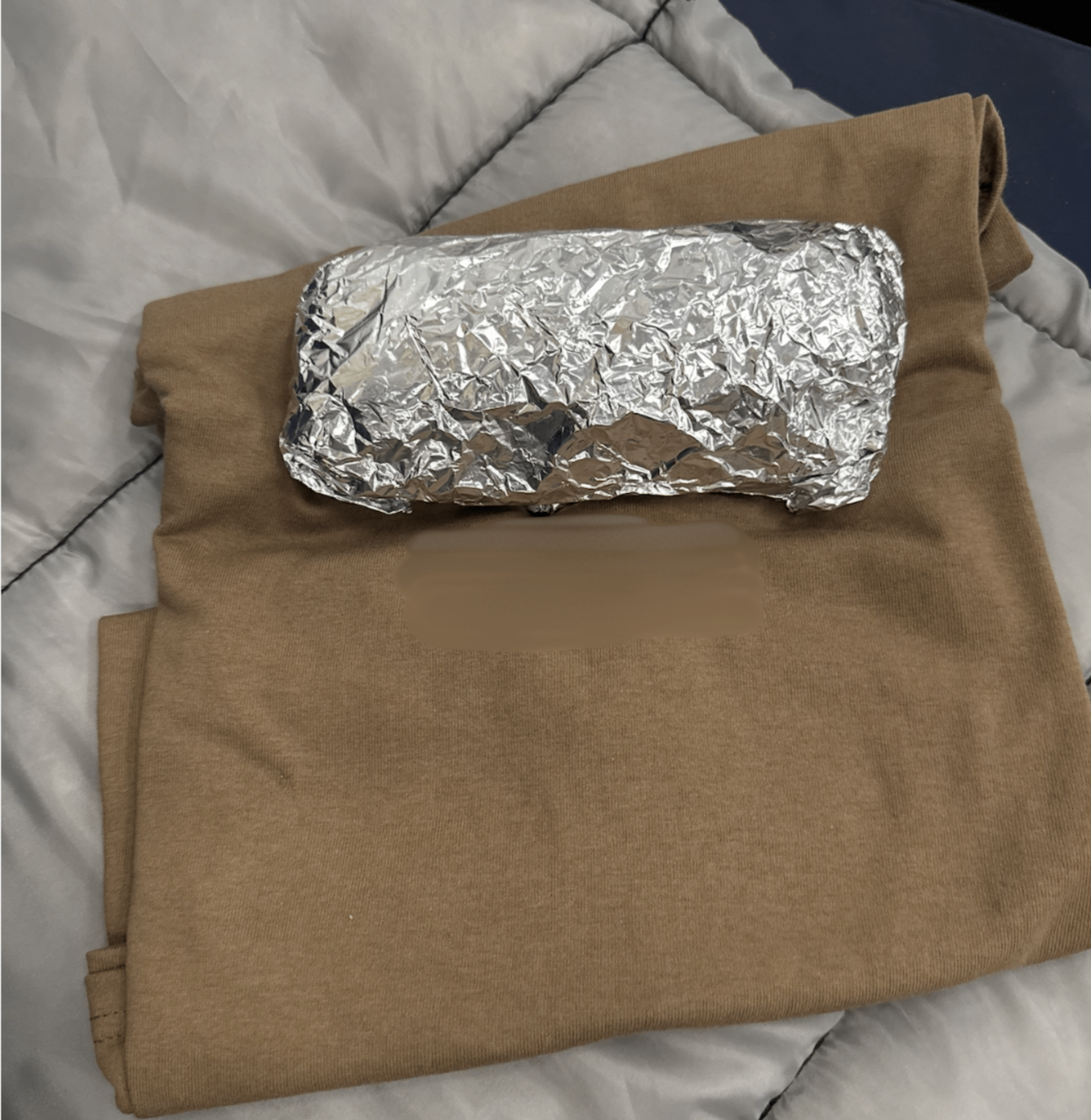
Upon graduation of Hell Week, you’ll swap out your white t-shirt for a brown one, and be rewarded with the best burrito or pizza of your life.
What is Walk Week?
Week 5 of First Phase, after Hell Week, is called Walk Week. Here, you’ll wear running shoes rather than the usual boots, and you’ll be allowed to walk between evolutions and give your body some time to recover from the stress of Hell Week.
What is the First Phase Lifesaving Test?
Immediately after Walk Week is a lifesaving test where you’ll have to rescue instructors from the bottom of the pool and tow them across the pool. This is an extremely difficult event, and the instructors do their best to make sure that you know that BUD/S isn’t over just because you’ve passed Hell Week. They’ll thrash around and beat you up in the water, and may even put a few extra weights in their pockets for good measure.
You can’t fix a lack of preparation with more information
While most SOF selection courses like to maintain a good deal of secrecy around the inner workings of their selection process and community in general, this is not really the case with BUD/S. If you want to know more about Hell Week or just about any other portion of the course, there is no shortage of footage on Youtube, or other first-person commentary in countless places online. Just keep in mind that information gathering cannot replace active preparation, and no amount of insider knowledge can help you persevere in a course as hard as BUD/S.
Knowing more isn’t the same thing as doing more.
For an example of that, listen to episode 62 of our podcast with Admiral Robert Harward (Spotify, Apple) where he relates a story about the attitude of a friend of his, one of the toughest people he’s ever known, at the beginning of their Hell Week.
Second Phase: Diving
Second Phase of BUD/S focuses on combat diving. Students learn open- and closed-circuit scuba, underwater navigation, long-distance dives, and techniques for conducting stealthy maritime operations. Physical training continues here, with runs, swims, and calisthenics at a higher standard.
The most difficult single event in second phase is usually considered to be OC8, a “pool comp” test involving an extremely stressful assessment of your ability to stay calm on a breath-hold while carrying out precise troubleshooting procedures for a complicated issue with your dive rig at the bottom of the pool after being knocked around by instructors who do their best to simulate being rolled around and disoriented by a heavy wave.
After OC8, you’ll have to pass a series of difficult navigation dives while also meeting the time standards for running and swimming before moving on to third phase.
Third Phase: Land Warfare
Third Phase of BUD/S focuses on land warfare. Students learn weapons handling, marksmanship, demolitions, small-unit tactics, patrolling, navigation, and other ground-combat skills while continuing demanding physical training.
Early in Third Phase you’ll be tested on land navigation, a common component of many selection courses that combines a practical necessity in military operations with what is essentially an IQ test. A surprising number of students fail land nav and are rolled back in training.
The Island
The second half of Third Phase is spent at San Clemente Island, known simply as “The Island.” Although graduation can feel quite close by now, you’re still a student and your career is still on the line every day. Plenty of students have been dismissed from BUD/S due to performance issues, or even character/judgement shortfalls at The Island.
Weapons assembly/disassembly tests
On The Island you’ll do a series of timed weapons assembly/disassembly tests, and these are notorious for failing unsuspecting students who either don’t take them seriously enough, get too stressed by the time pressure to think clearly, or struggle to learn the procedures. It’s an area where physicality can’t save you, and you’ve got to be able to learn quickly and then demonstrate a skill under pressure while regulating your stress response and thinking clearly.
Weapons handling
You’ll also do a lot of small weapons training here, and weapons safety issues are a common way to be either dropped or rolled from training.
Many of these safety issues stem from a failure of one of the four basic rules of weapons safety:
- Treat every weapon as if it were loaded.
- Never point a weapon at anything you do not intend to shoot.
- Keep your trigger finger straight and off the trigger until you have made a conscious decision to fire.
- Keep the weapon on safe until you intend to fire.
These rules may seem obvious, but nearly all safety violations, including the kind that can end your career, are ultimately violations of these basic concepts. They should be hardwired into your brain and followed without exception at all times, no matter how fast you’re trying to move or how much stress you’re under.
How Should You Prepare for BUD/S?
BUD/S is a unique animal in that it blends such a wide array of physiological capacities compared to most other courses.
You must be very comfortable in the water.
You must be a good swimmer.
You must be a good runner.
You must be strong enough to carry the heaviest member of your class up a sand berm.
You must have the strength endurance to withstand endless rounds of sprints, lunges, squats, and presses with a log.
You must have the power endurance to run under the boats at max effort through soft sand.
You must have the work capacity to handle thousands upon thousands of pushups and other calisthenics.
You must be able to keep calm under conditions that would make most people fall apart.
And more. There’s also surf passage, drownproofing, land nav, rucking, treading the twin 80s, endless nights of being cold, wet, and sandy, and countless other components.
And even then, many well-rounded athletes don’t have the mental and emotional skills necessary to withstand the stress and discouragement of the course. This is why training for BUD/S is a long-term process. You have to address many different variables, layer all of these skills and physiological adaptations together over time, and concurrently develop the mental/emotional skills that you’ll need throughout the course. Throughout the rest of this guide, we’ll be discussing these different components and how to develop them. In order to not write another book, we’ll often be providing a short overview of each topic and linking to a more in-depth article that you can read for further detail.
How Long Should You Train for BUD/S?
Most candidates should plan on at least 12 months of dedicated BUD/S preparation, while candidates with a major weakness may need 18–24 months. Running, swimming, water confidence, load tolerance, work capacity, movement quality, and mental skills develop at different rates. One unresolved weakness can end a candidate’s attempt even when every other capacity is strong.
It doesn’t matter how well you swim if you can’t hit the run times.
It doesn’t matter how good you are in the water if you can’t keep up under the boats or logs.
It only takes one limiting factor to end your time in BUD/S.
Developing any of these capacities is time-consuming in itself, and if you have a significant limiting factor in any area, your timeline will be even longer. You can’t fast forward biology. Physiological adaptations take place at a relatively fixed rate, no matter how much you’d prefer otherwise.
Most candidates should plan on at least 12 months of dedicated BUD/S preparation. Many of our successful candidates spend 18–24 months building the physical, mental, technical, and social skills required to compete.
This is one of the reasons officers from the Naval Academy have a higher success rate in BUD/S than other candidates. They spend four years preparing for the course, and show up among a field of people who have often been phoning it in for all but the last few months.
BUD/S is not something you are “trying out for.” It’s a job interview where you must show up with the requisite physical, mental, social, and emotional skills to excel in the course and perform well in SQT afterward.
The amount of training time you need depends on your baseline level of physical fitness, life experiences, and underlying mental and emotional skills.
In general, if you’re worried about surviving and meeting the minimum standards, you need to rethink your approach. The people who get selected are concerned about excelling and being at the top of the class, not scraping by. Be a professional and give this process the time it deserves.
| Starting Point | Likely Prep Timeline |
|---|---|
| Already a strong runner, swimmer, and durable under load | 12 months |
| Good general fitness, but weak in one major area | 12–18 months |
| Strong but poor endurance or water confidence | 18+ months |
| Barely meeting minimum standards | Consider delaying a cycle |
Why BUD/S Exposes the Quality of Your Preparation
Selection is a mirror.
BUD/S reveals your level of preparation. You decide the outcome long before you show up.
By the time you arrive, your capabilities have largely been shaped by months and years of training decisions: early mornings, long runs, high-rep calisthenics, boring mobility work, honest self-assessment, and the discipline to execute when nobody is watching or cares.
Many candidates treat selection like a proving ground. In reality, you do not rise to the occasion. You fall to the level of what you’ve consistently done.
The work shows up in the mirror whether you like it or not.
BUD/S is honest and uncaring. It’s indifferent to your ambition, your self-image, or your intentions. The NSW Center doesn’t care how bad you say you want it. The course just reveals what you’ve trained yourself to be.
Every choice you make, every f***ing day in the months and years before selection, contributes to the version of yourself that steps onto the grinder. Those who succeed didn’t “decide” to pass during the selection process. They made that decision long before.
As the Stoics put it, the obstacle doesn’t shape you. It reveals your shape.
How Should You Train Water Confidence for BUD/S?
BUD/S training revolves around the water. No matter what you’re doing, you’re never far from the ocean (and its latest gift from the Tijuana River) or the pool.
You’ll have to be proficient in treading, 50-meter underwater swims, lifesaving, underwater knot tying, drownproofing, and the more technically challenging tests in 2nd Phase, like OC8.
Water confidence should not be treated as a last-minute add-on. Candidates who are physically fit on land often fail in the water because poor technique and stress management compound under fatigue. The Water Confidence Course in our training app is an excellent resource for this.
If you have a location near you, we also recommend in-person coaching with Deep End Fitness.
For more on water confidence, read: Water Confidence Training
Water-training safety
How Should You Train for Swimming in BUD/S?
While many people fixate heavily on the 500m CSS (Combat Side Stroke, or Combat Swimmer Stroke) for the BUD/S PST, you’ll almost never swim such a short distance after your entry PST, and most of your swimming will be done with fins.
How should you learn the Combat Side Stroke (CSS)?
CSS is a unique stroke, and it’s not typically practiced in a conventional setting. However, the basic concepts of efficiency that apply to common strokes like freestyle apply just as well to CSS, so somebody who is a good freestyle swimmer will generally have little difficulty learning to transition to CSS swimming.
Non-swimming athletes will have to start from the beginning in learning the basics of being balanced and efficient in the water, staying relaxed, gliding effectively, etc.
For an in-depth breakdown of that process, read our article, Swimming 101: A Guide for Special Operations Selection Training.
In our training app, we’ve got a series of progressions built into our BUD/S training programs that work through drills designed to eliminate drag in the water and improve speed in the CSS.
For video breakdowns of CSS technique and the “top arm, bottom arm, kick, glide” sequence of the stroke, we recommend Stew Smith’s social media pages. Stew is excellent at breaking down CSS technique, and you can hear an interview with him on episode 45 of the BTE podcast (Spotify, Apple).
How do you condition your feet and ankles for UDT fins?
The fins you use in BUD/S will be stiff rubber UDT “duck feet” style jet or rocket fins worn with thin neoprene booties. They can place a significant amount of stress on your feet and ankles, and if you ramp up volume with them too quickly before you’re used to them they can be quite painful.
It’s important to work on good ankle mobility so that you can easily keep your foot pointed straight while kicking with the fins, and to ease your way into swimming with them. Start with a few hundred meters per swim, then ramp up to 500 to 1000 meters per swim once or twice per week, and keep increasing volume until you can handle a 4k swim with no meaningful discomfort in your feet and ankles afterward.
How is swimming with fins different?
Some people feel faster with fins, while others (often more experienced swimmers) feel more efficient without them. Regardless, you’ll have to get used to them to succeed in BUD/S, which means dialing in your technique.
The most common question is about kick amplitude. Bigger, more powerful kicks generate more force, but also produce more drag. Overly small, rapid kicks minimize drag but don’t produce as much propulsion. You’ll have to experiment to find the right sweet spot for you, because it can vary based on your body proportions and athletic background.
The universal rule with fin swimming is that you should generate force more from your hips than your knees. If the kick feels like doggy paddling or riding a bicycle, it’s knee driven and inefficient.
How should you train for treading water?
In BUD/S you’ll need both common forms of treading, the eggbeater (aka alternating breaststroke kick) style, as well as the less technical but more physically demanding flutter kick version.
Eggbeater treading takes a good deal of hip mobility – particularly a lot of internal and external hip rotation range. (If you’re lacking in that mobility, we strongly recommend the Bulletproof Joints mobility assessment in our app, as well as the movement circuits there.)
Assuming decent mobility, eggbeater treading then becomes a matter of practicing the motor pattern. For more on how to do this, read: A Treading Water Guide for SOF Selection
Flutter kick finning is less technical, but it does pose the same demands as learning to swim well with fins in general. You’ll need to practice generating the majority of your propulsion with your hips rather than your knees, and dialing in the amplitude of your kicks for the right balance of power and efficiency.
Why Is Aerobic Training the Foundation of BUD/S Preparation?
Aerobic training is the foundation of BUD/S prep because it improves your ability to recover between efforts, cover long distances, sustain output, and maintain decision-making under fatigue.
It doesn’t just raise your performance ceiling; it lifts the floor. Athletes who train systematically can move more blood, and therefore do more work, at the same perceived effort (or heart rate). A pace that leaves a casually trained candidate gasping at 165 bpm might feel comfortable and sustainable at 130 bpm or lower for someone with a well-developed aerobic base, simply because each heartbeat delivers more oxygen. This efficiency makes any given intensity easier to handle and quicker to recover from, unlocking greater performance at maximal output.
Developing this cardiovascular efficiency induces structural adaptations in the cardiovascular system. Your heart remodels itself, increasing the size and thickness of its ventricles, while your muscles expand dense networks of capillaries, the tiny vessels responsible for delivering blood directly where it’s needed.
Just as rebuilding a home requires far more time and effort than repainting the walls, remodeling your cardiovascular system can’t be rushed.
This process hinges on two essential factors:
- Session Duration: Many aerobic workouts (though not all) must extend over multiple hours.
- Training Consistency: These lengthy sessions must accumulate steadily, week after week, month after month, year after year.
Should Rucking Be Part of a BUD/S Training Program?
Rucking can support BUD/S preparation even though BUD/S is not primarily a rucking course. Building the Elite uses rucking to develop aerobic capacity, foot durability, load tolerance, and the ability to move under external load without adding all of that volume through running, particularly in the earlier stages of training.
BUD/S includes some rucking, but perhaps more importantly, rucking helps to condition you to the sort of load carriage that you’ll experience under the boats and while doing log PT events like hot laps. So, you need to be proficient with loaded walking. But that’s not the only reason for including rucks in your prep process.
The problem with Zone 2 Running (for most people)
For many athletes, rucking allows more productive Zone 2 training volume with less joint stress than slow, inefficient running.
Zone 2 running, in which you constrain your intensity to a specific heart rate range to target aerobic adaptations, is a popular concept but often misinterpreted. While you need a significant amount of zone 2 aerobic volume to develop your aerobic capacity, very few people can run at a decent pace long enough to achieve the volumes required for zone 2 development. It usually becomes a slow, joint-pounding slog. This is especially true for larger people, and those who are earlier in their training progressions.
Therefore, we prefer that our clients do much of their Zone 2 work through rucking (particularly earlier in their training progression) and spend their run training focused on technique and pacing. This produces better results in the long run and is much easier on joints.
You will need high-volume running, eventually
As your preparation for BUD/S progresses and you become more aerobically fit and a more technically proficient runner, you can shift an increasing amount of training volume into long runs, because you’ll need to be specifically prepared for the high-volume of running necessary in BUD/S. But, jumping into excessive running volume too early is a common cause of injuries like shin splints and hindered long-term progress.
Rucking progression
As your training progresses, you should start doing open-ended workouts that include other specific aspects of BUD/S (hello, high-rep calisthenic beatdowns) and have you put in 2 hours or more of rucking in a single training session. Your goal is to be so aerobically fit that a two-hour ruck has very little impact on your recovery capacity or performance in other events.
A simple progression looks like this:
1. Start with 20-25 pounds.
2. Build duration before speed.
3. Work toward 2-hour Zone 2 rucks.
4. Gradually increase the load toward 45 pounds dry.
5. Add selection-specific mixed sessions later in the prep cycle.
The goal of most of your ruck training is to move as fast as possible (under 15 minutes per mile) with a zone 2 heart rate (we discuss identifying heart rate zones in the rucking article linked below). The better you get at this, the better your performance will be once you start testing faster rucks toward the end of your training. Don’t rush this process. Build the foundation before you try to exploit it. Otherwise, you’re just hammering the gas pedal in a 1987 Nissan instead of building a bigger engine.
If you’re new to rucking, start with a pack weighing around 20-25 pounds and work up to about 45 pounds (dry – meaning not counting the weight of your water).
| Rucking Goal | Target |
|---|---|
| Beginner load | 20-25 pounds |
| Advanced dry load | Around 45 pounds |
| Aerobic pace goal | Under 15 mins/mile in HR Z2 |
| Long session duration | 2+ hours |
Read here for a full breakdown of rucking training and how to incorporate it into your program:
Rucking 101: A Guide for Special Operations Selection Training.
How Should You Train for BUD/S Running?
BUD/S is a running-heavy selection process, so candidates need both speed and durability. The goal is not simply to run more, but to run better, recover faster, and sustain higher output without breaking down.
Running and energy system development are separate entities; running is a high-skill activity, and anyone training for SOF is not a runner. You have too many other competing capacities to be competent in, relative to even a mediocre runner.
So, you must balance emphasizing your running fitness without losing or ignoring the relative strength, work capacity, and water confidence skills you’ll need to excel at non-running events.
Why does running technique matter for BUD/S?
The biggest mistake people make when it comes to running training is thinking that all you need to improve is to go harder for longer. However, without addressing your technical skills, you’ll significantly limit your progress and set yourself up for frustrating injuries, such as shin splints and knee issues. This is almost always avoidable and easily correctable with better running technique.
This means you have to think about running better, not just more.
The article linked below provides information on the technical aspects of running. Our app also offers a course on running technique, available as an on-demand resource, and is integrated into the early weeks of our programs.
How do you improve running economy and speed?
Improving running economy is one of the highest-leverage ways to improve BUD/S running performance.
Movement economy plays a massive role in expressing your physiological potential. For example, two people with the same VO2 max can have a 30% difference in running pace at the threshold. Changes to running technique (and their corresponding adaptations over time) can mean the difference between running a 6:00-minute-mile pace and an 8:00-minute-mile pace at the same relative effort and fitness level.
The running technique course in our training app can help you improve your running technique.
How does soft sand affect running demands?
This effect can be magnified by the soft sand that you’ll be running on in BUD/S. Sand displaces energy very easily, so any excess decelerative braking impulse (read: smacking your foot into the ground because you’re overstriding and have too much vertical oscillation) will amplify the amount of energy you waste with each step, and then have to regenerate for the next stride.
This is especially true for longer events where inefficiencies compound and lead to exponentially worse outputs. Therefore, in addition to a significant aerobic foundation, you must also emphasize proper movement/running technique.
The tissue adaptations that enable you to become an efficient runner, who can also handle large volumes of loaded rucks and team events, occur over months and years. There is no shortcut to this process. You’ll need to run consistently, without neglecting strength and work capacity, for years to develop the fitness necessary to excel in selection.
What types of running workouts should you use?
How you program your running workouts also matters. You need a variety of running workouts in your training regimen at any given time to develop your energy systems and running efficiency across a range of speeds.
A significant portion of your running should be spent building a foundation, with some individual focus on the side of the spectrum where you need more improvement, depending on whether you’re more limited in delivery or utilization. In other words, some people benefit more from dedicated speed work than others.
Read here for a full explanation of run training and how to incorporate it into your program:
Running Programming for Special Operations Selection.
How Should You Train Calisthenics and Work Capacity for BUD/S?
BUD/S involves a dizzying volume of calisthenics like pushups and pullups, stretched out over months.
Though the beatdowns in BUD/S aren’t specifically pass/fail, they are a primary means of evaluation, and the fatigue they impose on you will affect your performance elsewhere. So, if you can’t handle the volume effectively, or your range of motion or technique breaks down under stress and fatigue, you’ll eventually fail something that matters.
For instance, if you can’t alternate between intense sprints under the boat or during log PT with a mix of pushups, burpees, and 8-counts, you’ll suffer through much of First Phase much more than you need to.
Work capacity training should be incorporated into your program, anywhere from once to three times per week, depending on your personal limiting factors. BUD/S heavily emphasizes pushups, time in the pushup position, pullups, lunges, burpees, flutter kicks, and 8-count bodybuilders. You should be able to perform these perfectly for hundreds of reps every day by the time you’re ready to enter the pipeline.
Read here for a full breakdown of rucking training and how to incorporate it into your program:
Building Work Capacity for Special Operations Prep.
Does Breathing Technique Matter in BUD/S Training?
Breathing mechanics affect endurance, posture, stress regulation, recovery between efforts, and how well you maintain performance under fatigue.
It’s often overlooked, yet integral to everything you’ll do in pre-training and during BUD/S. Like running and rucking, we can see significant benefits from learning to do it better, not just more. How we breathe doesn’t just affect how we move oxygen and carbon dioxide in and out of our lungs. Respiration directly influences how blood flows into and out of the heart through changes in thoracic pressure gradients. It’s also a key driver of posture, determining how we distribute tension throughout our body and regulate our stress response, particularly during events like log PT and running boat.
This is crucial during BUD/S prep training because it significantly affects how efficiently we move under load and how we recover while continuing to work between all-out running efforts or during calisthenic beatdowns. If you can’t breathe effectively while continuing to work, you’ll slowly fall apart during these sessions and the events that follow. As fatigue and stress compound, they’ll further impact your cognitive performance and decision-making.
Read here for a comprehensive breakdown of breathing mechanics and guidance on incorporating them into your program:
Breathing and Performance: Incorporating Breath Training into SOF Selection Prep.
How Strong Do You Need to Be for BUD/S?
BUD/S candidates need enough relative strength to carry teammates and awkward equipment, maintain position under boats and logs, and tolerate high training volume, but maximal strength should not displace running, swimming, or work-capacity training. Building the Elite typically uses one to three strength sessions per week based on the candidate’s limiting factors, then reduces strength volume as selection approaches.
Your performance in BUD/S is most strongly determined by your aerobic capacity and strength endurance, so heavy strength training should only be as prevalent as necessary to hit ‘good-enough’ standards. Save the powerlifting and Olympic lifting for when you’re an operator. Nobody cares how much you can bench press when you’re running hot laps with a log for 45 minutes straight.
Keep in mind the goal of strength training: to support everything you do in training and selection. A better deadlift only helps you to the extent that it helps you carry a log or boat, improve your work capacity, perform well during buddy carries, or avoid injury.
In other words, don’t optimize the wrong thing. You need to be strong enough to handle the demands of selection and support your training, but fixating on becoming stronger than necessary inevitably comes at a cost. You only have so much time and recovery capacity, so unnecessary strength work can easily distract you from more important things.
Relative to other courses, BUD/S places a heavy emphasis on overhead pressing and holds (e.g., during overhead squats) during log PT. So, these movements should be trained extensively, and good overhead mobility is crucial.
The amount of strength training you need will depend on your physiological profile. We typically use one to three weekly strength sessions for clients, depending on their limiting factors. As you approach selection, strength training volume will typically taper to the minimum required to maintain health and retain relative strength.
Read here for a full breakdown of strength training and how to incorporate it into your program:
Strength Training for Special Operations Selection Prep.
How Can You Reduce Injury Risk During BUD/S Preparation?
At certain points, particularly during log PT, BUD/S places a significant demand on movement capacity. You must be able to perform calisthenics with a full range of motion and comfortably overhead squat a log with your boat crew. This requires excellent hip and upper-body mobility, which demands a thoughtful, consistent approach to movement work.
Additionally, what we do only matters as much as how well we do it. The training volumes required for selection prep and the rigors of selection itself mean that minor movement issues get magnified and can quickly become career-ending injuries.
Movement work isn’t glamorous or the most fun way to chase dopamine, but it’s a crucial part of long-term training. Over the years, we’ve learned that it separates professionals from amateurs. The pros get it done because it’s part of their job. The amateurs put it off until it’s too late.
In our app, we have a movement assessment tool that walks you through a series of drills to assess your individual movement characteristics, which then provides you with a series of drills based on your results that you can integrate into your daily routine so that you can move better, recover faster, and be less prone to injury. For more targeted issues, such as knees or shoulders, we also have a Bulletproof Joints series that will help you assess your needs and identify the most effective drills to help you move and feel better.
Learn more: Movement Capacity, Fidelity, Variability
Mental, Emotional, and Social Skills for BUD/S
Mental preparation for BUD/S should develop emotional regulation, attention control, communication, teamwork, and the ability to keep performing without reassurance. Fitness does not automatically create these skills; candidates need repeated practice making decisions, communicating, and regulating their reactions under controlled stress.
Handling Negative Feedback
Unlike some courses where the instructors are there to quietly supervise and assess you, the instructors at BUD/S will be in your face, and make things feel personal. For the most part, this is all scripted, and a standard part of the process. They will hammer you with relentless negative feedback about how terrible you are at doing burpees, keeping your UDT knife sharp, cleaning your room, etc. Like sharks sensing blood in the water, instructors will focus on you if/when they sense weakness and will do everything in their power to get you to quit.
Performing without Positive Reinforcement
Even when performing well, you’ll receive zero positive feedback. The best you can hope for is to be ignored when you’re performing up to standard.
It pays to be a winner, but only for a moment
Once in a rare while, you may win an evolution by, for example, finishing first on a round of sprints. In this case, you’ll be the beneficiary of the “It pays to be a winner” mantra of BUD/S, and your boat crew may get a short break while you watch the rest of your class do another round of sprints. But, these respites from the hardship of training will always be short-lived. No matter how fit you, you can’t out-exercise BUD/S. The course will break you down and make you question yourself, regardless of how fast you can run or how many pushups you can do.
From the comfort of your home, none of this might seem like a big deal or like it will affect you. But when you’re physically smoked, sleep-deprived, hypothermic, and stressed to the max, you will start to believe the instructors when they tell you that you don’t belong, are probably the worst student to ever waste their time by signing up for BUD/S, and are a liability to everyone around you.
If you don’t know how to continue moving forward when you have no motivation left and doubt your own worthiness, you will fold under the pressure. Doing so requires that you’ve done the work to build a variety of mental & emotional skills.
Communication Under Stress
You must also be able to communicate and work well with others. Instructors will observe how you work with your teammates, how you handle yourself under pressure, and how well you communicate and make decisions in stressful situations. They are looking for leaders, regardless of your rank, and your actions are more important than your words. You must be used to listening to a set of complex instructions when tired and stressed, and completing the required tasks based on those directions without hearing them again.
Teamwork and Decision-Making
In summary, in addition to being extremely physically fit, you must show up with the requisite mental, social, and emotional skills to navigate high-stress situations with your peers, resolve conflict, handle negative feedback, solve problems, answer difficult questions, and manage the uncertainty of not knowing whether you’re meeting standards. This doesn’t happen by accident. It requires a deliberate and well-thought-out process that considers far more than run times or calisthenic numbers.
BUD/S prep must include deliberate exposure to uncertainty, fatigue, social pressure, and complex decision-making. Being physically fit, in itself, is not enough.
Why Should a BUD/S Training Program Be Individualized?
There is no one-size-fits-all program for BUD/S prep training.
Every candidate requires a personalized approach to address their unique strengths and weaknesses (for more on this concept, read Average Fails Everyone).
One person may have excellent strength but weak conditioning.
One person may have great work capacity and conditioning but little experience in the water.
Another might be an excellent runner, but get crushed under axial loads like running under a boat.
Somebody else may be able to move well under a ruck all day, but blow themselves up on faster runs like the 2-mile run.
You get the idea. The same destination requires a slightly different path for each person. Everybody is trying to get into the same room, but they need their own key to unlock their particular door.
Because the details of any individual’s ideal program vary, we don’t have a single magical progression that accounts for every performance aspect and how it evolves over time.
Generally speaking, programs are highly divergent in the early stages (a year or more before selection) and gradually converge, becoming more similar as each trainee addresses their limiting factors and builds a more well-rounded physiological profile that meets the demands of their selection course. So, how you start training for a selection will likely be more variable than how you finish once you bring everything together.
| Candidate Profile | Likely Limiting Factor | Training Emphasis |
|---|---|---|
| Strong but poor conditioning | Aerobic development | Running, rucking, work capacity |
| Good runner, weak under load | Load tolerance | Rucking, carries, strength endurance |
| Strong endurance, poor speed | Higher-intensity running | Intervals, threshold work |
| Fit but poor water confidence | Pool stress management | Treading, swimming, water confidence |
What Does a 12-Month BUD/S Training Timeline Look Like?
A realistic BUD/S training plan should usually span 12 months or more. The further out you are, the more individualized your training should be. As selection gets closer, training should become more specific to the course.
Here’s a sample layout:
Phase 1: Build the Foundation, 12–18 Months Out
This far out, your training should be individualized and specific to your limiting factors. We always employ a concurrent training approach to ensure that we don’t neglect anything.
Concurrent means “done at the same time.” In this model, we target all physiological qualities simultaneously, and one or two specific qualities are emphasized for three to six weeks. As the famous track coach Charlie Francis described it, “Everything is done, only the volume varies.”
Your goal during this phase is to work up to the following capacities:
- Fine-tune your running technique and gradually build up to approximately 15 miles per week (at a minimum). By the time you’re ready to transition to a selection prep phase (6-9 months out), you should be running at a 7:00 min/mile pace for 5 miles. If you’re not at least at a 7:30 min/mile pace, you won’t be ready for selection and should continue to work on your running and consider pushing selection to the following year. Your running this far out is very quality- (vs. quantity-) oriented. With this foundation, you’ll start adding more weekly mileage as you get closer to BUD/S.
- Build an aerobic foundation via zone 2 rucking and long swims, working up to 2-3-hour rucks and swimming as far as 4,000m on a regular basis. By the end of this phase, you should be able to maintain a pace of 15:00 min/mile for 8+ miles without shuffling or ruck-running, in heart rate zone 2, and a 4k swim shouldn’t have too much impact on your recovery capacity. While BUD/S isn’t a rucking-heavy course, you do need to be able to move long distances on your feet, have a substantial aerobic foundation, and be able to move efficiently under load.
- Ensure your relative strength and movement capacity are sufficient to stay healthy as you add volume and transition to a more specific methodology.
- Calisthenics and work-capacity training should be a regular part of your schedule, 1-2 days per week. Beyond the PT test requirements, you’ll need to perform hundreds of calisthenics repetitions daily. It’s best to play the long game with push-ups, pull-ups, sit-ups, and extended-duration carries, building volume and top-end outputs over 6-12 months.
- Begin practicing water confidence and treading, so that you’re comfortable treading water for ten minutes or more, and you’re confident in the basics of water comp skills like mask/fin/snorkel drills, bobbing, 25m underwaters, etc.
- Start learning your knots: Square, Becket bend, bowline, clove hitch, right angle. Make sure you can tie them to an object with attachments on the ends so you’re not used to having an open end (like the end of your finger or a dowel with nothing on it), which makes it easier.
The number of strength vs. running, rucking, swimming, and work capacity sessions depends on your specific limiting factors. Assuming you have a solid training background (have been training consistently for years without neglecting any capacity for long durations), your program will fall within the parameters below:
- Strength workouts: 1-3 per week
- Running: 2-4 per week
- Rucking: 1-2 per week
- Swimming/water confidence: 1 per week
- Work Capacity: 1-2 per week
If you have a significant deficit in one area, such as strength, you should aim for the higher end of the range and be on the lower end with running. Those who need improvement in all areas will usually do best with a balanced mix of strength, running, & work capacity. If conditioning is your limiting factor, you may have only one strength session, 3-4 runs, and 2 rucks.
| Capacity | Phase 1 Goal |
|---|---|
| Running | Build toward 15 miles/week |
| 5-mile pace | Around 7:00 mins/mile before specific prep |
| Rucking | 2–3 hour Zone 2 rucks |
| Ruck pace | 15 mins/mile for 8 miles |
| Swimming | 4000 m continuous |
| Treading | 10 minutes |
| Work capacity | 1–2 sessions/week |
| Strength | Enough to support durability and load tolerance |
No one-size-fits-all template will work for anyone because your training history, ability to recover from training (life stress, sleep quality/quantity, and nutrition), and specific limiting factors matter.
Phase 2: Selection-Specific Preparation, 2–6 Months Out
This phase shifts from building general capacity to expressing that capacity under more selection-like fatigue, uncertainty, and mixed-modal stress.
At this point, you should have no glaring limiting factors. The most common one we see is running. If your 5-mile run is above a 7:00 min/mile pace for longer runs (5 miles or more), you won’t be ready for selection and in competitive shape, so you should delay for a year. You’re better off showing up once and crushing selection than delaying your long-term development by peaking for selection, failing, and having to spend two years or more in the fleet before having another shot.
Lifestyle factors
The second most common limiting factor we see is lifestyle-related. If you can’t handle 10-15 hours of weekly training volume, you might be capable of hitting all standards (passing the PST), but you won’t be in good enough overall shape to make it through the daily grind of selection for several weeks.
Sleep, Nutrition, and Training Consistency
You must get 7+ hours of high-quality sleep most days of the week, eat a healthy diet, and have no significant disruptions in training for the next six months. This can be hard to do with personal and professional obligations, but it’s necessary. Professionals get the job, amateurs polish their excuses.
From General to Specific Training
If you have been doing the work and have a solid foundation, it’s time to add more specificity. We do this via:
- Open-ended workouts: These twice-monthly sessions should last 3-5 hours and include a mix of runs, rucks, swims, carries, and beatdowns, with no way to predict what’s next or when the session will end.
- Highly-specific work capacity sessions: A mix of low-fatigue but high-volume methods and higher-rep/fatigue methods, such as circuits, that stress movement fidelity under increasing stress and fatigue levels. You specifically need to be able to perform hundreds of push-ups, sit-ups, burpees, and lunges without breaking down. Carrying a sandbag in the chest-carry position is important here to help condition your arms and upper back for the stress of carrying the logs in First Phase.
- Reduction in strength work: Unless strength is a limiting factor, strength training volume should be reduced to maintenance loads and frequency (1-2 sessions per week).
- Higher-intensity & longer runs: During this phase, you should be working up to 8-10 mile runs at around a 7:00-7:30 min/mile pace. You should consistently be doing repeats of various durations (400m – 1.5 miles) to improve efficiency during shorter, higher-intensity outputs.
- Feet-only water treading: Now that you can swim and tread water, start working on treading with your feet only. Eventually, add weight to your hands once you can maintain 10 minutes of feet-only treading. Other water confidence exercises, such as bobbing and mask retrievals, should also be practiced in a stressed or fatigued state.
- Water confidence training: In addition to being comfortable with treading water and swimming, you should continue training proficiency in other water confidence exercises, such as bobs, underwater crossings, underwater flips, and doing all of these in combination while fatigued. This requires an intelligent progression of water confidence over many months. If you’re well prepared for the water, you’re a much stronger candidate, and many of the earlier water-based events will be relatively low stress for you while the less-prepared students are fighting for their lives in the pool.
- Ensure that you have enough mobility to be comfortable in the bottom of an overhead squat with roughly 50 pounds. You’ll be in this position a lot during log PT, and you don’t want it to be a vulnerability.
| Training Element | Phase 2 Focus |
|---|---|
| Open-ended workouts | 3–5+ hour mixed sessions |
| Work capacity | High-volume calisthenics under fatigue |
| Log PT simulation | Sandbag in a chest carry position |
| Strength | Maintenance, unless still limiting |
| Running | Longer and higher-intensity runs |
| Water confidence | Feet-only treading and stressed pool work |
| Movement | Injury prevention and recovery + overhead squat mobility |
We also emphasize movement work and taking care of your body. Your training volume has been very high for quite some time. People are med-dropped due to injuries regularly in BUD/S (though not as often as you might think, relative to simply quitting), so the more time you invest in taking care of yourself during this phase, the less likely you are to see your dreams of graduating disappear in the face of an injury.
Phase 3: Taper and Peak, Final 1–2 Months
This will vary depending on whether you’re a fleet returnee, going to boot camp, or an officer heading to prep from college.
If you’re going to boot camp, the amount of time you’ll spend there will fade away some of the short-term anaerobic adaptations of a peaking cycle, so you won’t need to emphasize those sorts of performances as much before you ship out.
Regardless, at this point, you’ve done the work. It’s time to recover and put the finishing touches on your prep process.
One of the biggest mistakes you could make is showing up to selection beat up and with residual fatigue. By tapering volume and strategically integrating high-intensity sessions over the final 4-6 weeks, you’ll show up to selection peaking physically and feeling fresh. We’ve sent hundreds of clients to the SOF selection courses and have mastered this process.
A general formula would look something like this:
- Week 1-3: Low-volume, moderate-intensity strength work 1-2x weekly to maintain your strength. Short but intense runs (1-2 milers and 3-5 milers), relatively short and easy rucks (6-8 miles), and max-rep testing for pushups, pull-ups, situps, planks, & weighted carries 4-5 sessions per week with volume tapering down each week.
- Week 4: Drop nearly all training stress aside from easy maintenance sessions. You’ve done the work and applied all the necessary training stressors. Your final task before you ship out or head to prep is to support your body’s recovery as much as possible so you can fully realize the adaptations that will result from your training.
What Should You Do Next?
Preparing for BUD/S is not about scraping past minimum standards. It is about building the physical, mental, social, and technical capacity to perform under sustained pressure.
The candidates who succeed are not hoping that selection will reveal hidden potential. They have spent months or years building the habits, fitness, communication skills, and emotional control required to compete.
Train early. Train deliberately. Address your weaknesses. Build the full profile. It’s a job interview, and you know what a good candidate looks like. By the time selection starts, your preparation has already written most of the answer.
It’s up to you to do the work.
Frequently Asked Questions About Training for BUD/S
How long should you train for BUD/S?
Most candidates should plan on at least 12 months of dedicated BUD/S preparation. Candidates with a major weakness in running, swimming, water confidence, durability, or work capacity may need 18–24 months before they are ready to compete rather than merely meet minimum standards.
What should a BUD/S training program include?
A BUD/S training program should include running, swimming with and without fins, progressive water-confidence training, calisthenics, work-capacity sessions, sufficient relative-strength training, mobility, recovery, and mental and social skill development. The balance should reflect the candidate’s current limiting factors and become more specific as BUD/S approaches.
What are the minimum Navy SEAL PST standards?
As of July 2026, Navy.com lists minimum SEAL PST scores of a 12:30 500-yard combat sidestroke swim, 50 push-ups, 50 sit-ups, 10 pull-ups, and a 10:30 1.5-mile run. Minimum standards can change and are not the same as competitive preparation targets, so candidates should verify current requirements with official Navy sources.
Are minimum PST scores good enough for BUD/S?
Minimum PST scores establish eligibility, not readiness to perform well throughout BUD/S. Candidates should aim to exceed minimums while also developing longer-distance running and swimming ability, water confidence, durability, load tolerance, and the capacity to recover between repeated efforts.
How much running should you do before BUD/S?
Running volume should increase gradually according to the candidate’s training history, mechanics, recovery capacity, and injury history. Building the Elite generally recommends developing efficient technique and a durable aerobic foundation first, then adding higher mileage and selection-specific speed as BUD/S approaches.
Should you ruck when preparing for BUD/S?
Rucking can support BUD/S preparation even though BUD/S is not primarily a rucking course. Used appropriately, rucking develops aerobic volume, foot durability, load tolerance, and the ability to move under external load without creating all of that volume through running.
How should you train water confidence safely?
Water-confidence training should progress from swimming efficiency, treading, relaxation, and basic skills to more demanding drills under qualified supervision. Never practice breath holds, underwater swimming, weighted treading, or fatigue-based water drills alone because loss of consciousness can occur without warning.
Can strength training interfere with BUD/S preparation?
Strength training can interfere when it consumes recovery capacity needed for running, swimming, and work-capacity training. The goal is to develop enough relative strength for buddy carries, logs, boats, and durability, then maintain that strength while selection-specific endurance receives more emphasis.
What Is the Biggest Mistake Candidates Make When Preparing for BUD/S?
There is a fine line between knowing enough to prepare well for the general demands of a course and mistaking information-seeking for action.
In this guide, we’ve covered everything necessary to prepare yourself for the challenges of BUD/S, but it’s not a day-by-day breakdown of the course.
As an analogy, you don’t need to worry whether the test is going to ask you to know 2+3 or 6+1 if you can do arithmetic. The specific test will always fall within your established skillset. The same is true for those who are worried about the exact details of their upcoming selection course.
If you’ve put in the work to be good at calisthenics, it doesn’t matter if you need to do max pushups in two minutes, one minute, at a cadence, or not. You don’t need to worry about whether you’ll have to swim 500 or 1000 meters or whether or not you’ll be able to wear goggles if you know how to swim and are comfortable in the water. What if the 1.5-mile run changes to a 2-mile run? Are you a good runner? Ok, then that doesn’t matter either.
Of course, you need to know the general skills and physiological qualities that are evaluated in a given course. Don’t show up to a course like BUD/S hoping that your 5/3/1 powerlifting program will be good enough for your prep training.
If you’re going to BUD/S, you need to be strong at running, long-distance swimming, water confidence, calisthenics, and carrying heavy, awkward things around really fast. But trying to ferret out the exact amount of time you’ll be doing hot laps on Tuesday of the first week of first phase isn’t going to help you; it’s just indulging neuroticism and a fantasy of control.
Knowing every tiny detail of your course may feel like an advantage, but it’s actually creating a vulnerability. It shifts your focus from competence to predictability. Instead of building confidence through capability, you begin trying to create confidence through certainty. But confidence built on certainty is fragile, because reality rarely cooperates, especially in SOF selection. Confidence built on competence (read: consistent training developing broad skills and capacities) gives you an adaptable foundation that can roll with surprises.
Knowing won’t be of much help anyway. If you possess the right mixture of capabilities, you’ll succeed. If not, you won’t, no matter how much ‘insider’ information you have. More importantly, a focus on squirreling away nuggets of information about selection in the vain hope that it will be enough to pull you through distracts you from building the psychological and emotional skills you’ll need to navigate uncertainty, negative feedback, and the never-ending series of other stressors that combine to be the ruin of 70+% or more of hopefuls that attend selection.