

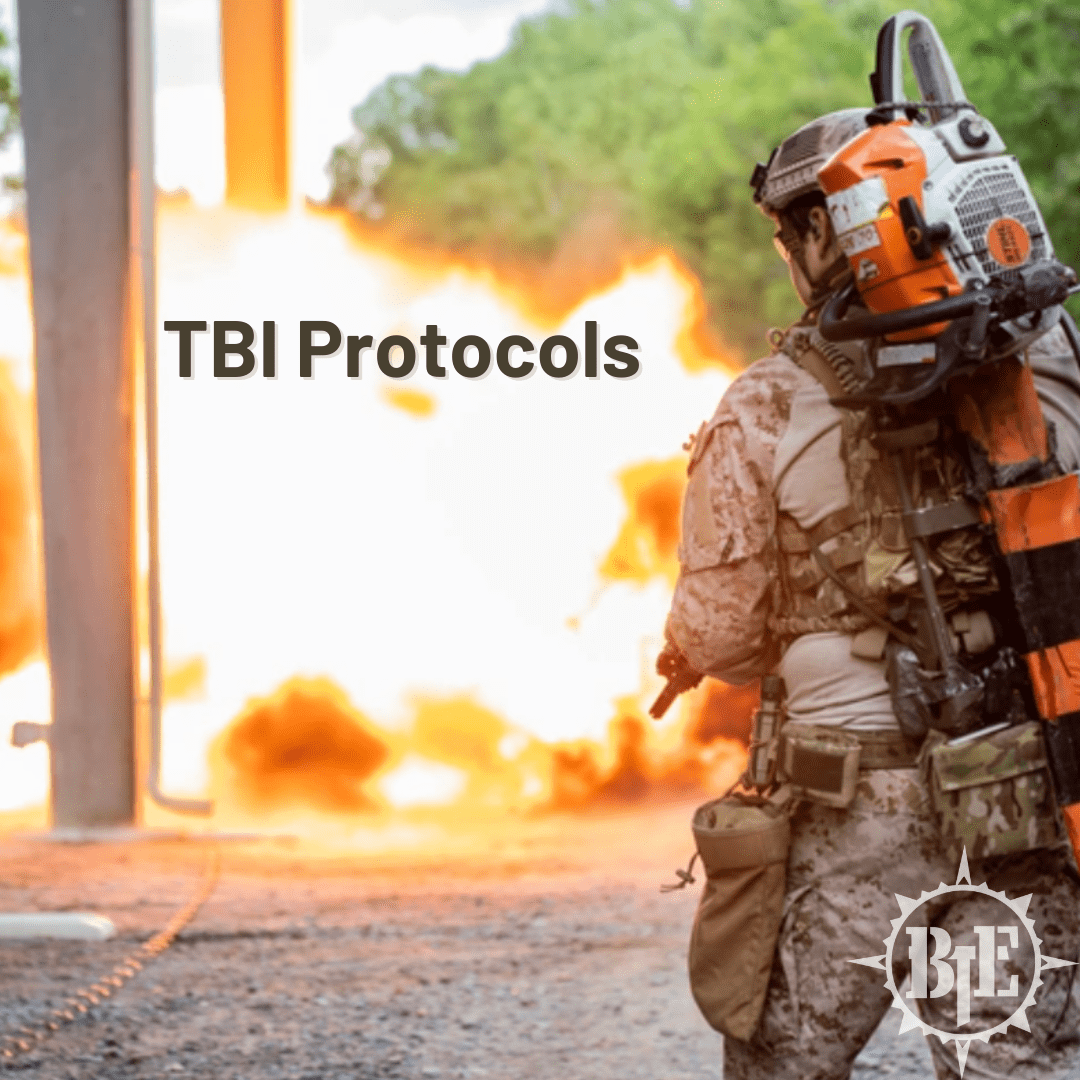
By Miguel Zeran and Dr. Tommy Wood
If you are in now, will be in the future, or were in the past, part of a specialized unit that blew stuff up, rode fast boats, jumped out of planes, trained direct action/CQC, shot big guns, punched each other in the face, or regularly conducted any combination of the above, then chances are high that the gray and white squishy stuff between your ears is a bit different than it was before you put on the uniform. Chances are also high that you, at some point, had a concussion, whether or not you lost consciousness and whether or not you saw a doc and got an official diagnosis.
While getting back in the fight tonight is always a concern, the scientific data are now showing that accumulated blast/acceleration/impact events can and do contribute to dementia later on in life. And since we now know what explosive breaching does to short term memory, imagine what explosive breaching does to short term memory!
What qualifies as a concussion or brain injury:
Some agencies and/or practitioners use LOC or loss of consciousness (with TBI’s categorized by how long you were unconscious), as the sole marker of concussion/TBI, while others utilize the Glasgow Coma Scale (GCS) to determine the severity of the injury.
*The GCS rates you on a scale for eye (1-4), motor (1-6), verbal (1-6), and pupil (0-2) response, with pupils scored separately; 13-15 is a mild TBI/mTBI, or a concussion. 9-12 is considered moderate and 3-8 is a severe TBI. Mild TBI/mTBI is defined as LOC of less than 1 hour and PTA for less than 24 hours, moderate TBI is defined by LOC between 1 and 24 hours or PTA for 1–7 days, and severe TBI by LOC for more than 24 hours or PTA for more than 1 week (Forde et al., 2014), OR, mild TBI/mTBI or concussion is clinically defined as a loss of consciousness lasting <30 minutes, post-traumatic amnesia lasting <24 hrs, or any alteration of consciousness. Moderate or severe TBI is clinically defined as a loss of consciousness lasting ≥ 30 minutes to prolonged coma, post-traumatic amnesia lasting ≥24 hours up to permanently (Ginsburg J, Smith T. Traumatic Brain Injury. [Updated 2025 Feb 17]. In: StatPearls [Internet]. Treasure Island (FL): StatPearls Publishing; 2025 Jan-. Available from: https://www.ncbi.nlm.nih.gov/books/NBK557861/)*
What’s important to know is that the TBI field still has not come to a consensus on what a concussion is. Additionally, it wasn’t until recently that science began to look at things like firing sniper rifles, jumping out of aircraft, riding in high-speed planing boats (yes, planing, not planning, although I’m sure that a long ride on a planning boat would be enough to make you want to slam your skull into the bulkhead, thereby also fitting into this category), and any sort of proximity to blast (interior/exterior explosive breaching, shooting indoors/on top of concrete/in small rooms or enclosed spaces, flashbangs, etc.), so we know much less scientifically about life as an operator than we do about, say, life as a collegiate or professional football (American or otherwise) player. While attention to brain injury in tactical populations is growing, it is still an emerging field with little in the way of longitudinal studies (following operators over years instead of a few weeks or months), so we still know relatively little in the way of how all this works in concert with repeated events, sleep, stress, nutrition, deployments, shift work, and everything else life in a uniform on a special team includes.
But here is what we can assume, with strong scientific support:
-Every single blast/acceleration/impact event counts.
-These single events add up over time to impact neurological function.
-You may not even notice signs and/or symptoms for years.
-We have absolutely no freaking clue how static-line/free-fall jumps, NEW (net explosive weight) and standoff distance, time in a high-speed boat, kicks to the head, Carl Gustoffs, or firing .50 cal rounds compound and contribute to a given level of cognitive decline or dementia risk. There are simply too many variables (poor sleep, poor diet, high stress, other exposures, etc.).
However, what is relatively safe to say, at least from where I sit, is that IF you are in a combat arms military occupation AND you have done any of the “cool kid” stuff (parachuting, boat rides, blowing stuff up, shooting really big guns, fighting people, throwing flashbangs at your feet because of stupid “roleplayer” rules), THEN you are likely at risk for increased cognitive deterioration compared to someone who drives a desk at work and does not carry a ruck and a gun on a daily basis.
So perhaps the logical question to follow is: can you recover from a (singular/many) concussion, or lots (and lots) of subconcussive impacts, blast waves, and head accelerations/decelerations?
YES!
What to do at the time of injury and immediately after:
Due to the initial and delayed injury responses in the brain, neuroinflammation and fuel delivery are the largest considerations when aiming to mitigate the damage of these occurrences. Therefore, recovery strategies should focus on decreasing one (inflammation) and increasing the other (fuel delivery).
However, temperature plays a critical role in concussion/TBI recovery, both at the time of injury and soon after. Core body temp at or around the time of brain injury can affect long-term recovery. If your brain is hot at the time of impact or immediately afterward, an injury-related immune response (fever) can act to worsen acute and chronic outcomes. In a heat-stressed environment, decreasing core body temperature can be critical to help mitigate damage. Mild cold water immersion and adequate hydration prior to engaging in high-risk activities in heat-stressed environments can also help to mitigate risk.
Post-injury, there is a large amount of scientific evidence supporting a rapid return to exercise, provided it is safe to do so (balance/vestibular complications, broken bones, penetrating trauma, amnesia, etc.). Exercise will increase blood flow, which will increase fuel delivery and byproduct removal. However, this needs to be reconciled with keeping core temperature low. Finding creative ways to exercise while keeping body temp low will help speed the post-acute recovery process; this can be something like outdoor exercise during cool/cold months, cranking up the air conditioning or floor fans, getting in and out of the cold plunge, sipping a good amount of ice slurry (water with small ice chips instead of ice cubes), keeping a hand on something frozen…, you get the idea. However, there is some consideration regarding time; the sooner post-injury you can get colder and stay colder, the better. (It is important to note that physiologically, it may not be the cooling that provides the benefit but rather the prevention of fever-related or environment-related core temperature increases.) Additionally, we are not talking about exercise racing, but low-level aerobic exercise and bodyweight calisthenics, at least initially in the few days post-injury. When engaging in exercise after injury, avoid higher levels of intensity that make any post-concussive symptoms worse, and slowly build up intensity over time.
Nutrition immediately post-injury should support a diet that keeps blood sugar stable. Large swings in blood sugar and hyperglycemia seem to worsen long-term outcomes in brain injury (and other health complications), so avoiding them will be helpful here. Minimizing foods that cause high spikes in blood sugar, like highly palatable sugary drinks, cakes, snacks, and processed items, can help recovery.
(If you want to hear it straight from the source, you can listen to Dr. Tommy Wood on Episodes 78 & 79 of the Building The Elite Podcast, Episode 23 of the Better Brain Fitness Podcast, or the Feb 12, 2025 episode of Perform with Dr. Andy Galpin and Dr. Tommy Wood.)
What to do long-term after a brain injury:
“How” you use your brain after injury (and even before!) can drive improvements in cognitive function and brain health. As the brain responds to demands, much like a muscle, different stimuli can support neuroplasticity and improvements in function; the things you want to be good at should be the things that you are doing/practicing to promote cognition across the lifespan, not just after injury.
However, there’s not a large amount of research or information regarding guidelines or protocols for concussion/TBI management long-term or 6 months post-injury. This leaves a lot of folks with questions about best practices on how to manage/mitigate symptoms when regular exposure is a part of “normal life.” Therefore, it becomes increasingly important to adopt practices that can help reduce the risk of dementia and cognitive decline independent of brain injury occurrence or risk. This requires a step away from what we know, or, rather, what we don’t know about how to manage brain injury long-term, to focus more on what we do know, and what can improve brain health and brain function for anyone. One area that has received a fair share of attention is reducing inflammation in the brain.
Physical activity and physical fitness appear again and again in the literature as a means to improve brain health and function and reduce inflammation. The suggestions range across all methods and modalities of exercise from strength training, to HIIT, to LSD endurance-based training; it all helps!
Sleep is critical to brain function, and not just for folks who have experienced brain injury. This includes sleep hygiene, exercise timing, food composition and timing, light exposure, caffeine consumption, alcohol use, and much more. The goal is to reduce the things that inhibit the brain’s ability to respond to stimuli, like alcohol and nicotine, as well as things that cause chronic stress/inflammation, and increase the practices that support deep, consistent, and restorative sleep. (If you want to learn more about sleep, check out Dr./Maj Allison Brager on Episode 77 of the Building The Elite Podcast.)
Nutritional considerations for long-term brain injury management have a multidirectional relationship with sleep and exercise and center around the avoidance of pre-diabetes and type 2 diabetes. This tends to follow the same nutritional path as post-acute brain injury management in omitting foods and beverages that rapidly increase blood sugar. Another way to accomplish this is by eating predominantly whole, unprocessed foods. And while the evidence for its use is more anecdotal, a long-term ketogenic diet may be helpful for managing long-term symptoms like significant cognitive impairment and brain fog.
Things you can measure pre/post-injury:
B vitamin status (b12, folate, homocysteine), iron status (not being anemic), and vitamin D status (which has wide-reaching influence on physiology, from sleep and immune health to muscle action and gut health), are also important factors in both general brain health and the recovery and long-term management of brain injury. Regular blood panels with your primary care giver can help you nail these down.
Pituitary gland function is another important aspect of brain health, as it is responsible for producing the hormones (hormone-releasing hormones) that tell the body what hormones to produce, like thyroid and sex hormones, ACTH and cortisol, and prolactin. Asking your physician for a pituitary screening can help rule out dysfunction here.
You might hear folks throwing around the term CTE (Chronic Traumatic Encephalopathy). Unfortunately, at least for now, this is something that can only be diagnosed during autopsy – someone needs to take your brain out of your skull and examine it.
Supplements you can take to help support brain health/function before and after brain injury:
Lots of data illustrate how creatine levels can be decreased in the brain through repetitive impacts. It is then not a huge leap to assume that creatine levels in the brain can be similarly reduced by repetitive exposures to low-level blast waves, whiplash, or anything else in the SOF/SOF-like/Specialized unit list of job-related events that rock your dome. But studies also show that creatine can be increased in the brain through daily supplementation. As a nutritional supplement, creatine monohydrate is the most rigorously studied compound to date; it has decades of research showing the benefits it can provide in the gym as well as in cognition with no risk of unwanted effects or long-term usage complications. While it is powerful as a post-injury energy source for the brain, it works best when used prophylactically and chronically, as in taking it before such an injury occurs and, once injury occurs, continuing to take it. There have been enough really smart people touting the importance of creatine for brain health that it might now be safe to say that, if you have a brain, you should be taking creatine. It’s also relatively cheap as far as supplements go.
Dosage strategies:
On it for life; <~200 pounds of human = 5-10 grams/day
On it for life; >~200 pounds of human = 10+ grams/day
Similarly to creatine, choline has been shown to decrease in the brain with repeated impacts. And while the scientific jury might still be out on just how much of a benefit choline provides in brain health, function, and recovery, a few eggs per day is a small price to pay, with zero drawbacks, in an effort to support any maintenance or improvement in brain-related metrics.
Dosage strategies:
3-4 eggs per day. Or you can look for other ways to to hit 550 mg/day here.
Relatively low-dose DHA and EPA (mostly found in fish oil; long-chain Omega-3 fatty acids) can reduce markers of neuronal injury during periods of repeated impacts to the head, increase arterial pliability, decrease neuronal inflammation, and increase hippocampal size. All things that are important in the brain injury setting, as well as for overall brain health and function.
Dosage strategies:
2-4 grams of omega-3s per day, preferably with 2 grams coming from DHA alone
Magnesium levels correlate with both cognitive function and long-term dementia risk, and are an important factor in regulating neurotransmission after an acute neurological injury. Excitotoxicity, a dysregulation of how neurons fire at the point of injury, which releases excitatory amino acids that can overstimulate other neurons that can then cause mitochondrial dysfunction and sometimes neuronal death – magnesium helps to regulate this process. Additionally, lots of folks around the world are magnesium-deficient just based on diet alone, so this is a good one to get onboard prophylactically as well. Lastly, vitamin D is magnesium-dependent in eight different processes that convert inactive D to the active form your body uses. It’s pretty well-known how important vitamin D is for health (immune, gut, brain, sleep), so magnesium is an easy win across a few aspects of health.
Dosage strategies:
200-600 mg per day (bisglycinate, malate, sulphate – all are good forms)
*Warning! High-dose magnesium is used clinically as a laxative, especially in the oxide and citrate forms. The only reason you would dose at 600 mg is if you spend all day sweating (magnesium gets excreted via urine and sweat), otherwise, 200-400 mg per day will be fine. Even then, it might be a good idea to take separate smaller doses over the day if you are looking for higher daily intake.*
Blueberries contain anthocyanins, which have been shown to be protective against oxidative stress (in animals) and promotive of memory performance and cognitive performance (in humans), despite a lack of brain injury-specific research in humans. These are another low-cost zero-risk (aside from potential allergies) intervention that have been shown to be supportive against cognitive decline.
Dosage strategies:
1 cup per day (preferably wild-grown)
For a longer science breakdown of the above nutritional interventions, look here.